EIFS leak tracing & wall rebuilds
Window heads, sills, roof-wall kick-outs, pipe penetrations and wet sheathing opened and rebuilt.
Manhattan · Brooklyn · Queens · Bronx · Staten Island
Water stains around a window or ceiling rarely line up with the spot where rain enters an EIFS wall. We trace the entry point, cut out wet foam and sheathing, fix the flashing or joint that failed, and rebuild the assembly.
Book spring work now. Winter assessments and estimates available.
Photo: Stock photo
Three core repair scopes built around the details that let water into New York City foam-board facades.
Window heads, sills, roof-wall kick-outs, pipe penetrations and wet sheathing opened and rebuilt.

Top-of-wall metal copings, scuppers, back-wall EIFS and roof terminations that feed water downward.
Setback terraces, slab edges, door thresholds and railing posts where standing water enters the facade.
Select what you see on the facade or indoors. Surface clues on foam-board walls usually point to a specific failed joint higher up.
Pick one or more above.
Forty-five-degree cracks radiating from window sills or heads.
Peeling paint, damp drywall returns or drips during wind-driven rain.
Wall sections that flex inward more than surrounding EIFS.
Vertical staining beneath projecting horizontal foam trim or window sills.
Bubbling, peeling or delaminating acrylic coat on upper floors.
Cracked, shrunken or pulled-away sealant around frames, vents and sleeves.
Send 3–5 photos to (929) 209-3122 or through our form: one close-up, one full elevation above the leak, and any indoor stain.
Our team reviews your photos Monday through Friday and replies with a plain-English read on likely water paths and next steps.
Our crew travels in for scheduled visits to inspect joints, probe suspect foam and review any engineer or architect drawings.
You get a clear written scope with photos showing what needs to be opened, flashed, rebuilt and sealed.
Our own insured crew completes the flashing, foam, mesh, base coat and finish work at about 40 °F and rising.
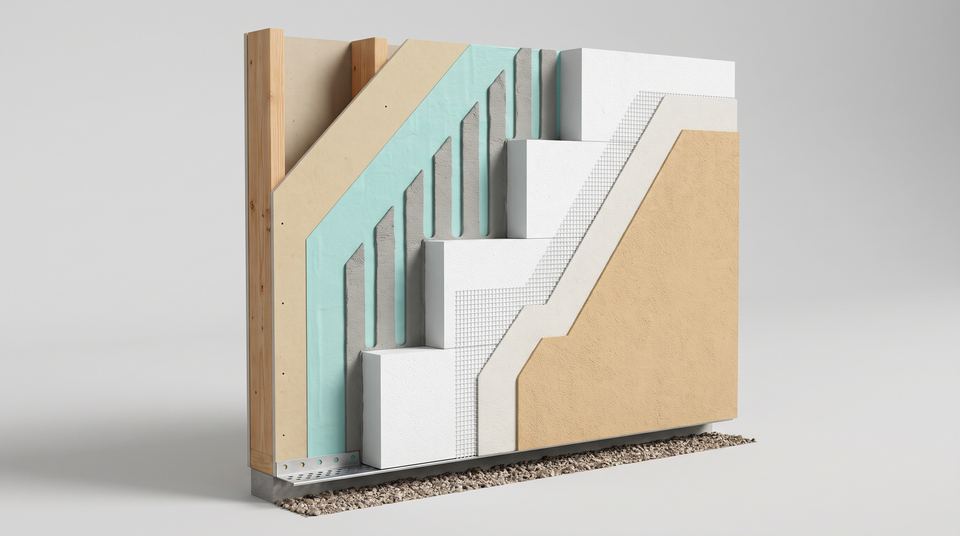
Exterior insulation and finish systems—often referred to as Dryvit or Sto after common system makers—wrap a building in expanded polystyrene foam board, fiberglass reinforcing mesh embedded in base coat, and a textured acrylic finish. That outer skin sheds rain well until a perimeter joint opens up. Once water slips past a window corner, a flat foam trim band, a terrace threshold or a parapet coping, gravity pulls it downward behind the foam or along floor slabs until it finds an opening into the interior.
That hidden travel path explains why caulking right above a wet living-room window or painting an elevation with thick coating so often fails. On framed houses in Queens, Brooklyn, Staten Island and the Bronx, trapped water softens plywood or OSB sheathing out of sight. On taller apartment buildings and mixed-use facades, moisture tracks behind insulation boards and freezes during winter cold snaps, pushing the finish loose stories below the real defect.
Different New York City buildings come to a leak problem from different starting points:
We are an EIFS repair contractor—not a licensed engineer, architect or home inspector—and we never offer statutory facade compliance inspections as a service. Our job is the physical investigation for repair pricing and the hands-on EIFS, flashing, sealant and coating work that dries the wall out. New York EIFS Leak Repair is operated by The Dom Construction Group LLC out of Albany, with our own insured crews traveling into all five boroughs. Read more about our company and team experience.
AI-generated illustration
Temporary weatherproofing in freezing months and when permanent acrylic coats can go back on.
How our Albany-based crews schedule leak repairs across Queens, Brooklyn, Manhattan, Staten Island and the Bronx.
Share your name, phone number and 3–5 daylight photos: one close-up of the suspect spot and one full elevation.
Water that gets past a coping joint, setback terrace or upper window corner rarely pushes straight through the structural wall right away. Instead, gravity pulls it downward behind the foam insulation boards or along floor-slab edges until a rough opening, tie or penetration lets it indoors. Repairing only the stained area downstairs traps water higher up, which is why tracing always starts by checking every joint above the leak.
No. We are an EIFS repair contractor, not a licensed engineer, architect or home inspector, and we do not perform statutory facade compliance inspections or pre-purchase home inspections. When a building already has a licensed engineer or architect, we carry out the physical EIFS, flashing and sealant repairs specified in their report. For homeowners or managers investigating a leak directly, we probe suspect joints to prepare a written repair scope.
No. Coatings refresh faded acrylic finishes and bridge very fine surface crazing on dry, sound walls, but they cannot span moving window joints, replace missing metal kick-out flashing, or dry out wet sheathing already trapped behind foam board. Worse, a heavy film over a wet wall slows drying and accelerates substrate rot and winter freeze-thaw blistering. Entry points and wet sections must be rebuilt before any elevation is recoated.
Yes. The Dom Construction Group LLC is based in Albany, New York, and does not keep a New York City office. Our own insured field crews travel into Manhattan, Brooklyn, Queens, the Bronx and Staten Island for scheduled diagnostic visits and repair jobs. Reviewing clear daylight photos ahead of the trip lets us arrive with the right probing tools, access plan and scope background for your building.
Access depends on the elevation, sidewalk layout and roof setbacks. Our own crew sets pipe scaffold where ground or setback framing makes sense, and boom or scissor lifts are rented or owner-furnished where street or courtyard clearance allows. Many parapet and setback-terrace repairs can also be worked partly from the roof or terrace deck with proper protection, alongside our field team's years of prior swing-stage experience in NYC.
Nearby Westchester and Nassau buildings by arrangement
Have an active leak or a suspect stain? Text us photos.
Book spring work now. Winter assessments and estimates available.